Is it better to speak or to die?
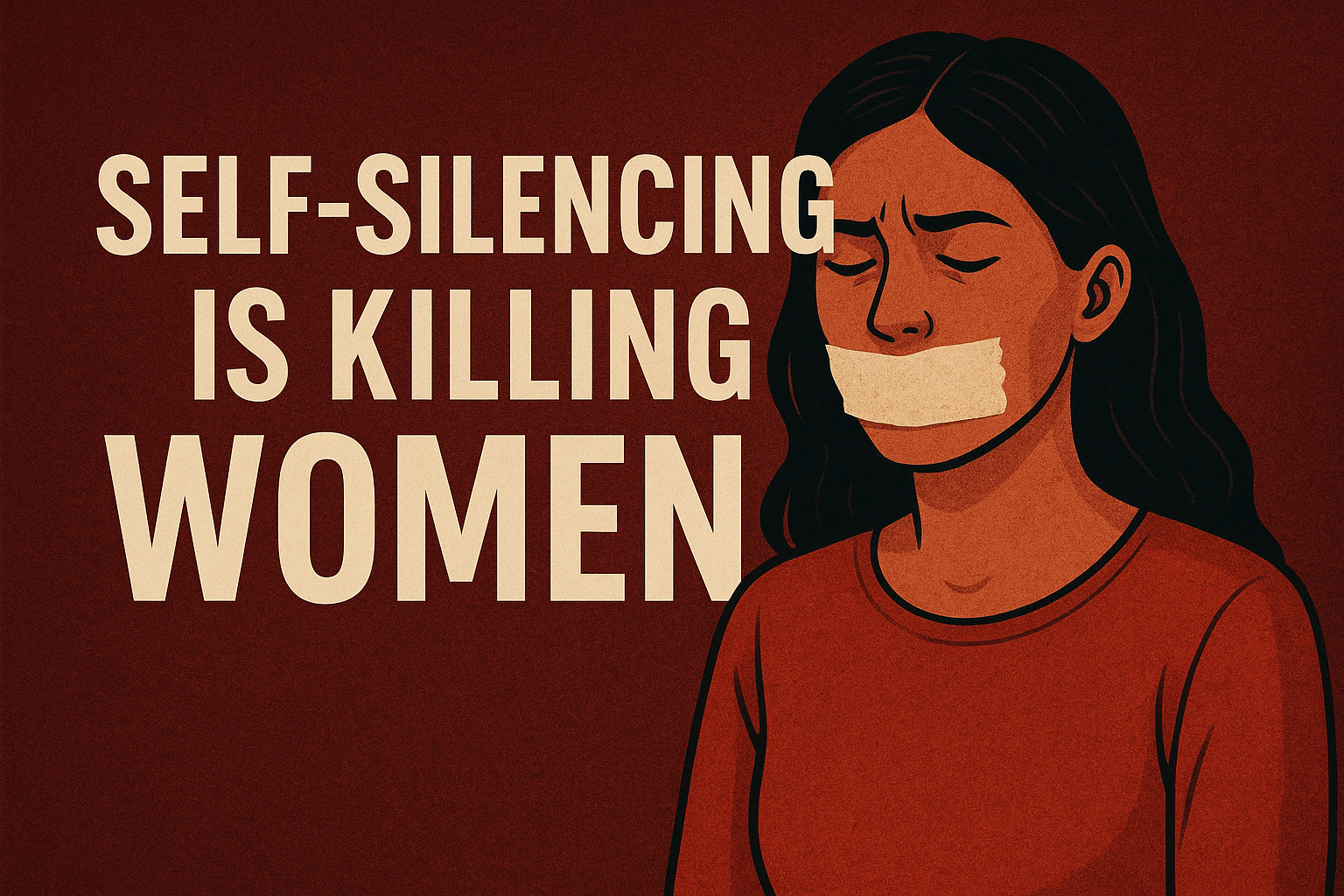
Self-Silencing is a new phrase but an old norm, transpiring since decades. It mainly involves inhibiting your self-expression to maintain a relationship. Both men and women self-silence, but women do it more often due to cultural and societal pressure. Not expressing healthy anger, bottling up your emotions, not being able to say “no”, etc. are forms of self-silence. Women push down their beliefs, swallow their emotions and put their needs aside to “fit” the norm. Our society praises women for their selfless, agreeable, pleasing and self- sacrificing behavior. Even women who have been a victim of such practices encourage that it pass down to the youth just as it is. Such practices have a big impact not only on their mental and emotional wellbeing but also on their physical health. Today, women fall ill to many diseases at a rate much higher than men. They account for almost 80% of autoimmune disease cases. They are at a higher risk of suffering from chronic pain, insomnia, fibromyalgia, long COVID, irritable bowel syndrome, and migraines, and are twice as likely as men to die after a heart attack. Women experience depression, anxiety, and PTSD at twice the rate of men, and face a nine fold higher prevalence of anorexia, the deadliest mental health disorder (referred from Times Now magazine)
Generic and hormonal factors alone aren’t the cause of such diseases, mental health also determines the state of your body. While self-silence itself is destructive for one’s mind and body, such demeanor is celebrated by the society showcasing them as well behaved and mannered. Some women are labeled as strong for being emotionally controlled, suppressing their feelings and thoughts in order to preserve peace between relationships, all while suffering injustice in certain
cases. Self-silencing is linked to depression, anxiety and eating disorders in many females of all ages even as early as pre-teen. It increases the risk of cancer and pre mature death in women. Teenagers and young women often compare their pain and sentiments with those of others and presume that their emotions and traumas aren’t worth expressing.
“These are just puddles that I’ve trampled on compared to the rivers that I’ve swum in”
It is also linked to gender discrimination at home, institutions or workplaces. Women are often described as ‘too emotional” being told to speak with “facts not feelings” and men are “logical”. This issue is mainly rooted in gender norms, cultural expectations and societal pressure. Women, who go against these stereotypical norms are entitled & “rude”, “defiant”, “unruly”& “rebellious”. But there is also an aftermath for going against this norm, sometimes speaking up would cost you your job, being angry would upset your partner, expressing your thoughts would enrage the society and implementing in your beliefs would stir up the culture and invite emotional, mental or physical abuse. Self-silencing is an inevitable curse that women have to deal with at some point in their lives being psychologically enmeshed in their relationships, doing emotional labour, and passing it down like the legacy that the coming generation never asked for.