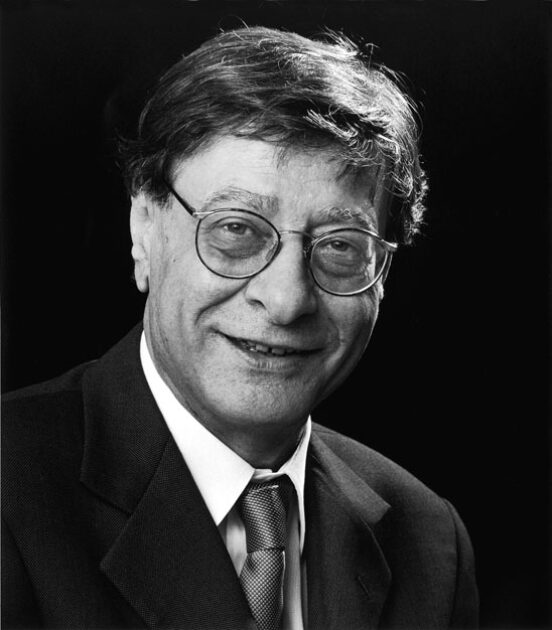
In 1964, when Mahmoud Darwish first recited Identity Card at a public gathering in Nazareth, something extraordinary happened. The crowd didn’t just applaud; they roared the refrain back at him:
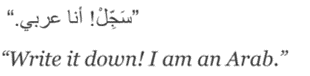
What started as one poet’s declaration turned into a collective cry, resonating through the streets and across generations.
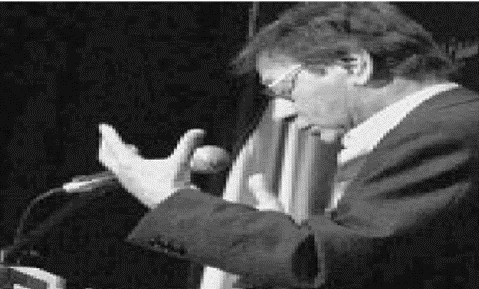
Few poets have taken on the weight of a people’s history with such courage and beauty as Mahmoud Darwish. For Palestinians, he was the national poet, the voice declaring their existence against erasure. For the world, he showed that poetry can hold both defiance and tenderness in the same breath. His verses sit at the crossroads of resistance and love, making his work both a shield and a song.
The Power of Naming
Darwish’s Identity Card, written in the 1960s, is one of his most iconic works. With its strong refrain:
| “Write it down! I am an Arab”
the poem turns the simple act of naming into an act of resistance. At a time when identity faced systematic erasure, Darwish boldly claimed it, refusing to be invisible. Even with its sharp political edge, the verse carries a musical rhythm, metaphorical artistry, and the dignity of someone who understands that language lasts where weapons fail. In this, Darwish teaches us that poetry goes beyond aesthetic pursuit; it becomes a matter of survival.
The Poet of Universal Conscience
But Darwish was never solely the voice of defiance. To reduce him thus would miss the breadth of his genius. Alongside thunderous calls for recognition, he crafted poems of extraordinary tenderness, such as Think of Others:
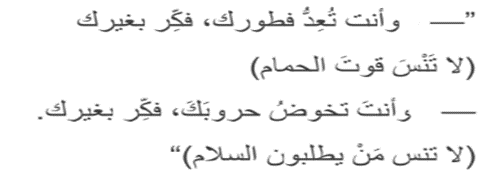
“As you prepare your breakfast, think of others—
(do not forget the pigeons’ food).
As you wage your wars, think of others—
(do not forget those who seek peace).”
This gentle imperative reveals Darwish at his most expansive. The poem moves from intimate morning rituals to grand conflicts, asking us to extend compassion beyond ourselves even in our smallest moments. The parenthetical asides; pigeons needing sustenance, souls yearning for peace, function as whispered reminders that our actions ripple outward, touching lives we may never see. The poet who once thundered against oppression here softens into a universal conscience, shifting from the intimate Palestinian struggle to the larger human condition. Rooted in exile and dispossession, his verse blooms outward into a call for empathy and shared dignity.
Love as Homeland, Memory as Myth
Across his career, Darwish produced a vast body of work dancing between epic and lyric, history and memory. In A Lover from Palestine, he blends the beloved’s voice with the homeland’s:
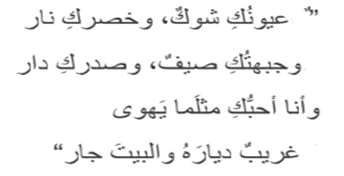
“Your eyes are thorns, your waist is fire,
Your forehead is summer; your chest is home.
And I love you as the exile loves
His homeland, and the neighbor his house.”
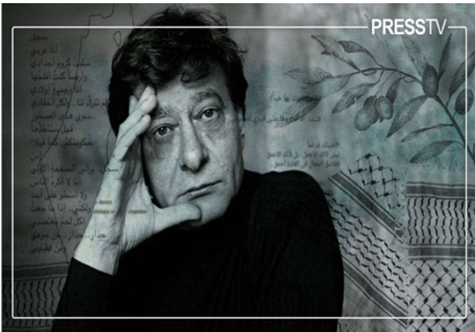
These lines fuse romantic and national longing into something inseparable. The beloved’s body becomes geography—eyes that wound like thorns protecting territory, warmth that both burns and comforts. When Darwish writes “your chest is home,” he collapses the distance between personal affection and territorial belonging. The final simile cuts deepest: to love as an exile loves their homeland is to love with desperate, consuming need—the kind that comes from knowing what it means to lose everything. To embrace this beloved is to embrace Palestine itself – tender and fragile, yet unyielding.
In Why Did You Leave the Horse Alone?, Darwish transforms personal memory into collective myth:
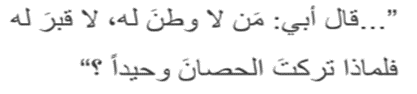
“My father once said: He who has no homeland has no grave on the earth…
So why did you leave the horse alone?”
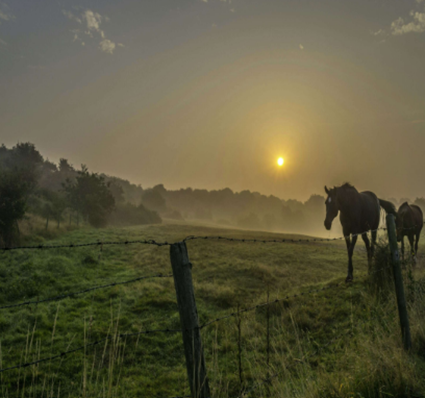
The abandoned horse becomes a haunting symbol of heritage left behind during displacement. In Palestinian culture, horses represent nobility, continuity, and ancestral connection. The father’s wisdom that landless people cannot even claim death’s final resting place underscores the existential crisis of statelessness. The child’s question echoes across generations: in fleeing, what irreplaceable parts of ourselves do we abandon? The poem aches with absence while insisting that memory possesses power to outlast loss.
In Unfortunately, It Was Paradise, he crafts lines blurring despair and longing, exile and transcendence:
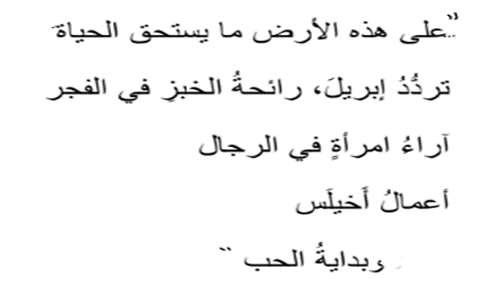
“We have on this earth what makes life worth living:
April’s hesitation, the aroma of bread at dawn,
A woman’s point of view about men,
The works of Aeschylus,
And the beginning of love…”
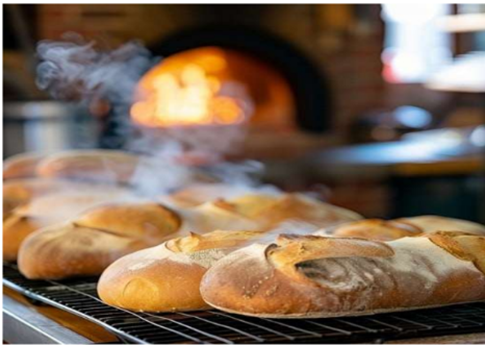
Here Darwish catalogues what anchors us to existence: not grand abstractions, but precise sensory and emotional experiences. “April’s hesitation” captures spring’s uncertain arrival, that liminal moment between winter’s death and summer’s promise. Fresh bread at dawn speaks to sustenance both physical and spiritual, the daily miracle of nourishment. A woman’s perspective offers balance, wisdom, the essential other viewpoint. Ancient Greek tragedy reminds us that human suffering has always existed, always been worthy of art. And love’s beginning, not its fulfillment, matters most, because hope lives in possibility. These verses reveal Darwish not merely as political poet but as universal humanist, elevating daily life into symbols of endurance and hope.
A Mirror to the Present
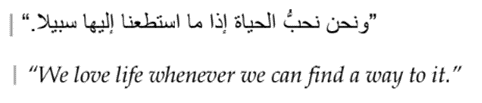
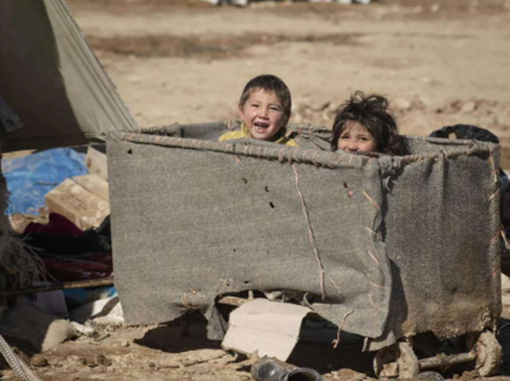
Today, as violence against Palestinians continues with relentless brutality, Darwish’s words echo with painful clarity. His insistence on identity, dignity, and memory feels less like historical artifact and more like a mirror held up to current crisis. When bombs fall on Gaza, when families face displacement in the West Bank, when voices suffer silencing, his verses stand as testimony that Palestinians are not statistics but human beings bearing histories, dreams, and names. His poetry refuses the erasure that violence seeks to impose.
The Timeless Duality
This combination: defiant yet tender, political yet personal, renders Mahmoud Darwish eternal. He could shout against injustice and whisper about love in the same collection, speak for his homeland while touching hearts continents away. His words sprang from Palestinian soil yet traveled far beyond, proving that the language of loss and longing transcends all borders.
In his defiance and tenderness alike, Darwish continues reminding us that even under injustice’s shadow, the desire for life, love, and freedom will always endure. He shows us that resistance can sing, that love can revolutionize, and that poetry can carry both exile’s ache and return’s hope—speaking not only for Palestine, but for all who know the struggle to live free, and the longing to be at home in the world.