(The Karan Thaapar Interview)
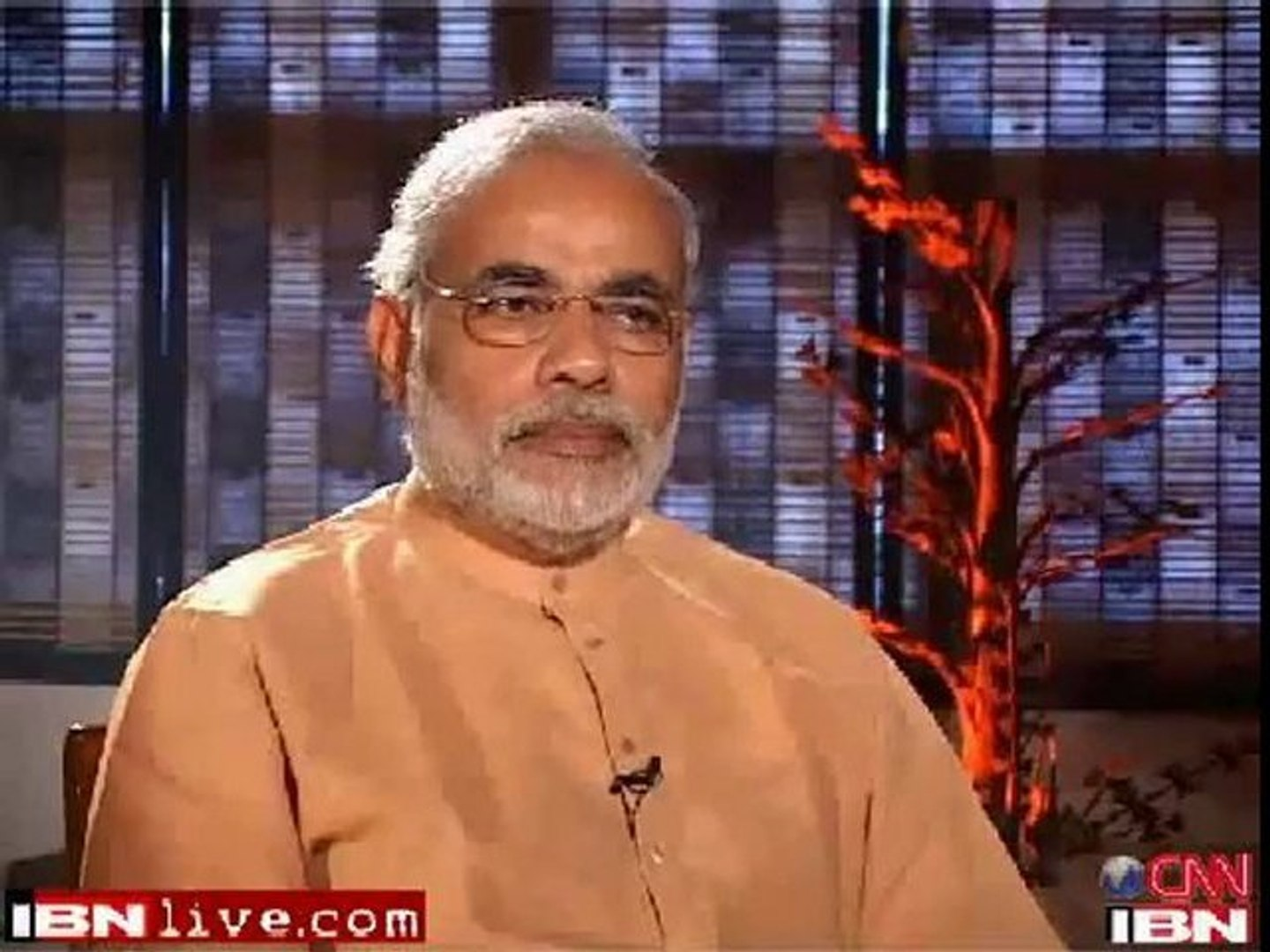
Gandhinagar. . October 21, 2007. The Chief Minister of Gujrat remained seated at his residence, facing Karan Thaapar, the CNN-IBN Journalist at his residence. Wearing a saffron colored kurta, a symbol of strength, courage, and sacrifice for the Indians, Modi went on to blame the fact that when he is referred to as being a “mass murderer” or someone who is “prejudiced against Muslims”, is due to “2 3 persons who use this terminology”. Pretending to impersonate a macho cool man who has never done wrong and isn’t bothered by such proven accusations, Modi revealed what was already known to millions of Indians all around the world.
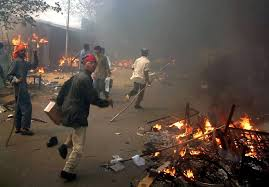
“We don’t have any orders to save you”; “We cannot help you, we have orders from above”; “If you wish to live in Hindustan, learn to protect yourself”; “How come you are alive? You should have died too”; “Whose house is on fire? Hindus’ or Muslims’?” were the only words echoing the streets of Gujarat for Muslims seeking help from Police or Government Officials.
Modi’s eyes flash and the reaction is that of wide-opened eyes for a flash of a second in the first minute of the interview as Thaapar mentions the words “innocent children and women”. What lies behind this fraction of a second reaction might as well hold an agreement in Mr. Modi’s subconscious mind connected to the horrible butchering of Muslims in 2002 conducted under his supervision and guidance.
Women were raped, pregnant women and their unborn baby bellies were ripped out, people were cut up with swords, dragged out of their hiding places and burnt with kerosene, and just like that, the Muslims of Gujrat became victims to an ideology that follows neither the principles of the Indian Constitution, nor is capable of doing anything closely human.
The Chief Justice of The Supreme Court of India stated that the then Gujrat Government was a Modern-day Nero. Nero watched as Rome burned and so did Modi, as the Muslims were burnt.
Politics in India has rarely been an area of discipline or sophistication. When we talk about what we wish to become when we grow up, a person rarely mentions being a politician for being a politician means rising to power, being drowned from top to bottom with corruption cases and letting personal grudges and wrongful trainings guided by hateful ideology take over you.
A senior police officer’s sworn statement to India’s Supreme Court alleges that Gujarat Chief Minister Narendra Modi deliberately allowed anti-Muslim riots in the state. (BBC)
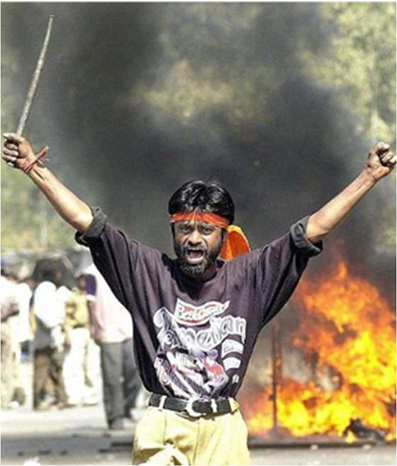
Several officials and media activists have testimonies based on reports, interviews and analyses that conclude the Gujurat Riots to be a pre-planned mission of Mr. Modi. He was witnessed to be speaking to the Hindu mobs, urging them to make Muslims pay for the pilgrims that died at Godhra and that it was time to make the Muslim community pay for it.
Sanjiv Bhatt says he attended a meeting at which Mr. Modi is alleged to have said that the Hindus should be allowed to vent their anger. (BBC)
The Gujrat Government allowed the gang rapists and killers of 2002 riots against Muslim women to walk away from prison, their presence, welcomed with sweets and garlands.
The Nero Regime has undergone all sorts of methods and procedures, illegal and dissatisfactory to somehow suppress the documentaries, witnesses and proofs of Modi’s involvement and leadership skills put to wasteful use in leading the Gujrat Riots.
When Modi ascended the pure throne of Indian PM-ship on May 26, 2014, he did so while being covered in the bloods and tears of thousands of Indians. The throne, which is provided by the highly noble Indian Constitution has been marked and spotted with blood and poison since 2014. The man who took over the responsibility of the welfare of the entire nation in 2014 is a man who allowed the premature release of 11 men responsible for gang rape of pregnant Bilkis Bano and three other women.
Mr. Modi is a man who rose to power in the State of Gujrat. A state where Mahatma Gandhi was born. The State of Gujrat, until 2002 had been a symbol of peace and freedom for the Indians. It is marked as the birthplace of our Father of the Nation, Mahatma Gandhi who fought for the rights of Indians and when poison had spread way too far and ahead at the time of Partition, for the rights of Muslims in India.
Mr. Modi has long tried to separate the identity of Muslims in India, connecting us to countries where the religion is largely followed. What he always forgets is when we write or mention our identity, we do not make it a point to mention ourselves as “Indian Muslims” but rather, simply “Indians”.
In the end, the debate is not merely regarding Modi, his governance or Gujrat Riots, it is the role of media and power will always seek to shape its own narrative, but journalism exists to question, remember, and hold authority accountable. When the press chooses comfort over courage, truth becomes fragile and history begins to repeat itself.
Perhaps the truth lies not in chaos but in the questions asked in that interview room in Gandhinagar. Perhaps it is Karan Thaapar who stood up to take the step in an effort to show world that journalists aren’t government employees. Perhaps in that fraction of a second moment when Modi’s eyes went wide open, we had our answers and merely needed to act.