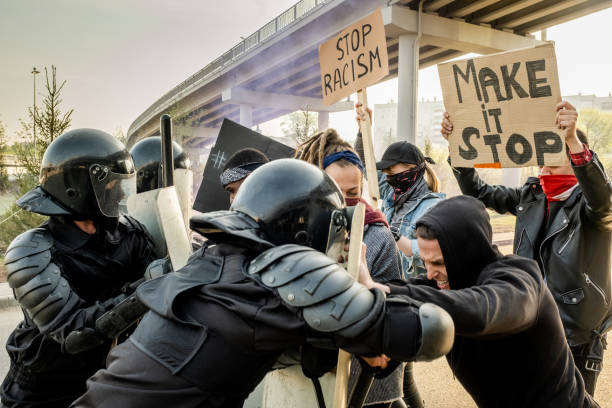
The right to protest has always been the core of democracy, a way for citizens to hold those in power accountable. From anti-apartheid rallies to climate marches, collective defiance has shaped history and led to reforms. Yet today, that same act of courage is being labeled as a crime. Across both democracies and authoritarian regimes, governments are tightening laws, increasing surveillance, and calling activism instability. The result is a quieter, more anxious world where speaking out feels dangerously close to breaking the law.
When Democracies Turn on Their Citizens
The suppression of protest is no longer limited to dictatorships. Even established democracies are restricting dissent under the guise of maintaining public order. In the United Kingdom, the Public Order Act of 2022 granted police the authority to limit demonstrations considered “too noisy” or “disruptive,” a move critics say erodes free expression. In Australia, new state laws threaten climate protesters with up to two years in prison for blocking roads. In the United States, often seen as a global symbol of free speech, more than thirty states have introduced bills that increase penalties for protest-related offenses. Some even shield drivers who injure demonstrators blocking traffic. These measures do more than regulate crowds; they redefine protest itself, turning civic participation into defiance.
The Authoritarian Playbook
For authoritarian regimes, this approach isn’t new. In Russia, citizens protesting the Ukraine war face detention under “disinformation” laws that ban criticizing the military. In China, those who participated in the 2022 protests against strict COVID lockdowns were quickly identified through facial recognition and detained. The message is clear: dissent equals to disorder. Fear has become a much more effective silencer than any wall or baton.
Technology: The New Police Baton
Technology has become the modern state’s quiet enforcer. Social media, once celebrated as a tool for liberation, now doubles as a surveillance network. Authorities no longer need to chase protesters through the streets; they can find them through their phones.
In Hong Kong, police tracked pro-democracy demonstrators using Bluetooth and location data. In India, student activists opposing citizenship laws were charged under anti-terror legislation, with their WhatsApp messages used as evidence. In this digital age, every post, photo, and location ping can be weaponized, until silence begins to feel like the only safe choice.
The Cost of Silence
Across the world, the right to protest is being quietly rewritten. Laws passed in the name of safety often enforce submission instead. Activists are labeled radicals, movements are treated as threats, and even lawyers and journalists defending them face intimidation. What’s most dangerous is not just the crackdown itself, but how easily people have begun to accept it—the belief that peace means quiet, not justice. Yet democracy has never thrived in silence. Nelson Mandela was imprisoned for demanding equality. Martin Luther King Jr. was jailed for leading peaceful marches. History remembers those who spoke, not those who silenced them. When governments criminalize protest, they are not simply punishing activists; they areeroding the very concept of citizenship itself.
|Freedom rarely disappears overnight. It fades one restriction at a time, until people forget what it feels like to speak without fear. If democracy is to endure, protest cannot be treated as a privilege. It is a right that must be defended before silence becomes the only sound left.