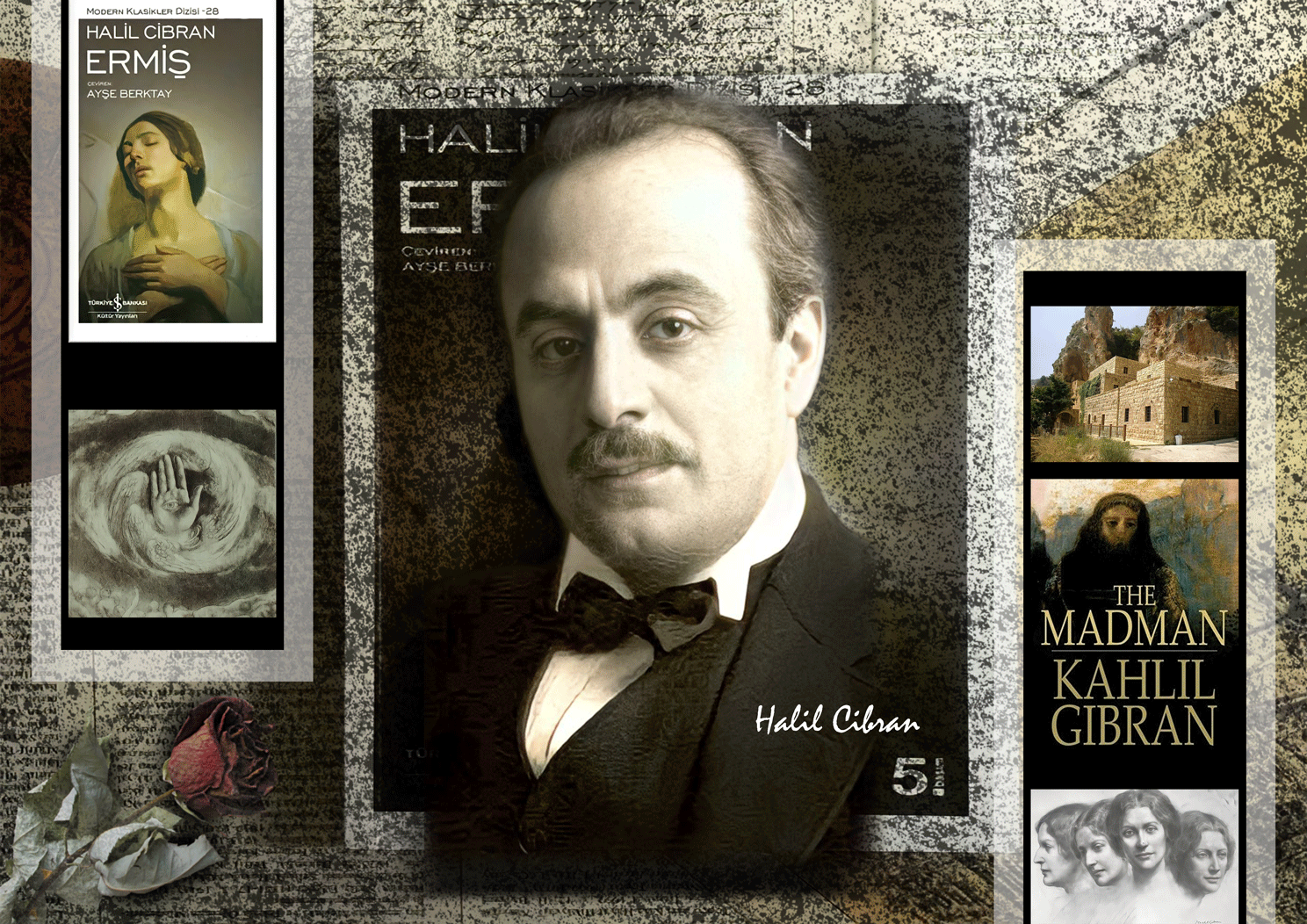
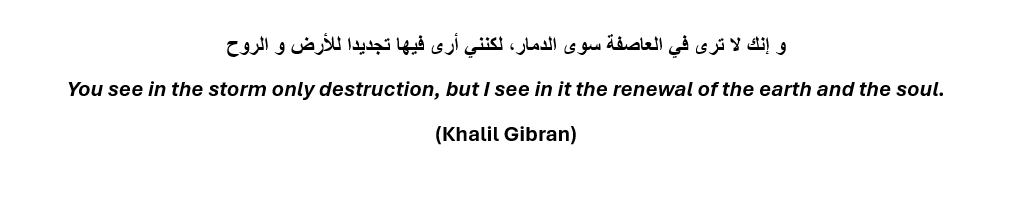
For those unfamiliar with these words, they belong to Khalil Gibran, a poet, painter, philosopher, and one of the brightest voices from the Arab world. Reading Gibran means entering a landscape where storms cleanse, where sorrow turns into joy, and where every aspect of life shines with meaning. His writing does not just rest on the page; it stays in your mind, echoing like scripture and resonating like a song.
Born in the mountain town of Bsharri in Lebanon, Gibran was taken as a boy to the busy immigrant streets of Boston. He lived between two worlds. He carried the scent of his homeland into the hustle of the West, blending Arabic sensibility with English prose, coloring his adopted language with shades of his native one. In this way, he became a bridge. His voice was distinctly Lebanese but also deeply human. He spoke to anyone willing to listen about love, faith, freedom, and the hidden beauty of suffering.
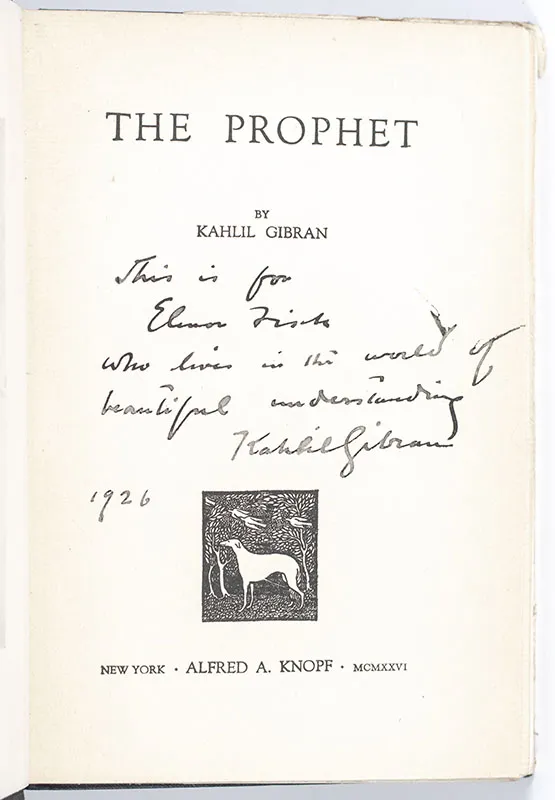
Among his many works, The Prophet shines brightest. Since its release in 1923, it has been translated into over 100 languages and has never gone out of print. Readers revisit it during times of change ; when they marry, when they mourn, when they start anew. It offers no rules, only reflections. Perhaps none of these reflections has captured the world’s imagination more than his piece On Love.
“When love beckons to you, follow him, Though his ways are hard and steep. And when his wings enfold you, yield to him, Though the sword hidden among his pinions may wound you.”
Here lies the essence of Gibran’s genius: his refusal to make love soft and sweet. Love, in his view, is not a gentle comfort but a consuming fire. It can hurt as much as it heals, break as much as it builds. Yet, in giving ourselves to it, we are transformed. This contradiction, love as both suffering and salvation, is what gives his words their lasting power.
Gibran does not limit love to romance. His love is the cosmic force that connects all things, the storm and the renewal, the sorrow and the joy. To resist it is to shy away from life; to embrace it is to willingly face both pain and beauty. His quiet miracle is that, even as he warns of love’s dangers, his words inspire us, making us yearn for that very risk.
In a world that often simplifies love to mere sentiment or transaction, Gibran’s vision feels revolutionary. He returns love to its rightful place ; not a pastime, but a journey; not a comfort, but a calling. Nearly a century after his words first appeared, they continue to resonate ; whispered in
wedding vows, quoted in classrooms, tattooed on skin, and displayed on walls. His poetry, born from exile and longing, has become universal scripture.
To read Gibran is to remember that storms represent not just endings but also new beginnings. That destruction hides renewal. That love, in its purest form, is not here to pamper us but to shape us into something greater. So, when we hear his words, we are invited not just to admire their beauty but to live by their truth.