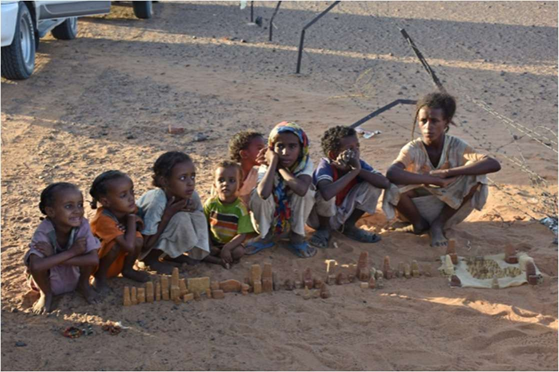
“Their childhood ends where our silence begins.”
In many areas worldwide, as the sun rises, children wake up to birds chirping and the sound of pancake batter being mixed downstairs, while their parents remind them to get up before the school bus arrives. The children leave their beds, prepare themselves, put on tidy clothes, and have their breakfast. Many even have the luxury of being fed by their mothers’ hands, while some have the luxury of doing so right at their school. But when we look around us, we do not notice a single world for all the children of this planet. We notice two contradictory worlds, colliding at the border of discrimination and negligence.
While in some part of the world a child gets ready for school, another gets ready to be bombed; while one child wakes up to the sounds of birds and parents, another at some corner of the world wakes up to the screams of his parents; while one child prepares projects out of cardboard boxes, another prepares the graves of his loved ones. The clock ticks, the world moves on. The child going to school gets ready to step out into the world and do something for the community while the other child gets lost and buried amongst the bombed and massacred streets.
Gaza, Sudan, Ukraine, Congo or Myanmar. The price remains the same: the life itself. With time, we have come to realize that to be a child with certain rights, one must first fulfill the criteria of being someone “desirable” from a “preferred race”. For as long as a child is born in a powerful nation, his/her future is safe. Chances of being violated, kidnapped or bombed? Almost zero.
Childhood remains the cheapest casualty in today’s world. According to UNICEF reports, “Over 473 million children lived in areas affected by conflict in 2023, a number that is expected to have risen in 2024 and 2025.” This measures approximately 1 in every six children.
How often do we look at a normal child living a normal childhood and take it as an opposite reflection or reality that might be happening to another child at the same time? How often do we wonder about the harsh realities? How often do we realize the values by which this world functions? That some children deserve to make the headlines while some must become merely a number amongst numbers on those very headlines. Some children deserve to have parents, a home, a school, a normal childhood, while some, not even a sense of security.
What exactly is it that defines what rights a child must have? Above all, should there really be such rules that set different priorities and rights for children around the world? Why can’t every child be treated the same? Why must not Muhammad living in Gaza or Fatima living in Sudan or Fedir living in Ukraine have the same opportunity as Jonathan or Sarah, living in USA or UK of getting an education or celebrating festivals? Is it because Muhammad is an Arab child or Fatima is a black Sudanese girl or Fedir lives in an attacked country? Or is it simply because the world doesn’t really care?
“Why must not Muhammad living in Gaza or Fatima living in Sudan or Fedir living in Ukraine have the same opportunity as Jonathan or Sarah, living in USA or UK of getting an education or celebrating festivals? Is it because Muhammad is an Arab child or Fatima is a black Sudanese girl or Fedir lives in an attacked country? Or is it simply because the world doesn’t really care?”
Gaza: children collect garbage and sell it in the market. Schools remain bombed. Futures remain collapsed. Miles and miles of graveyards for as far as the eye of a child can see. Starvation, humiliation, deaths and a sense of betrayal.
Sudan: abduction, mass slaughter, violence, oppression, another payment done by sacrificing another childhood.
Congo: caught between displacement and minerals wars.
Ukraine: life under war zones, collapsed buildings and a constant fear of attack.
The price remains the same: childhood.
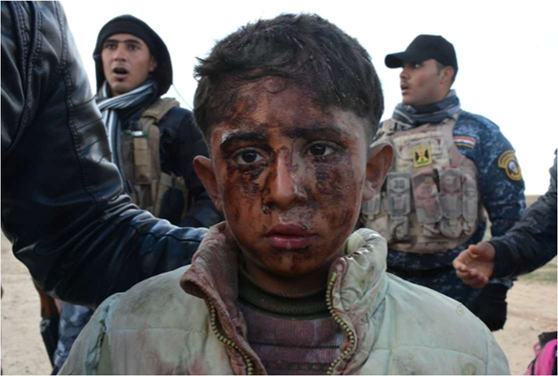
Children living in chaos and war zones grow up faster than their bones allow them to. Their mind focuses on shaping and connecting their identity to survival. For them, every morning brings another day of child labor, displacement, and more deaths. They learn to share responsibilities that many adults don’t even think of doing in their 20s. These neglected and ignored children learn to prepare graves at an age when they should be preparing science projects. They learn to work to feed their younger siblings and go to sleep hungry rather than being tucked into beds. They learn to provide hope to their siblings rather than getting to hear stories from their parents.
The children and youth community of any nation remains the main target of oppressors, for killing them means killing a nation’s hope, future and power. Children are merely innocent beings that are yet to walk and hence, easier to silence. Bombing? The easiest method. Our world remains a selective judge. The world very carefully selects which victim must make it to the headlines and receive help and which victim must be left unattended under rubble. International laws remain firm and speaks loudly in conferences while remains simply a whisper in war zones.
There remains a child living in a war zone who thinks of all the help that might come someday; a child who looks up at the sky and wonders what wrong could have been possibly done for the world to treat him like that; a child gets buried under a rubble as bombs drop down; in some region today, a child smiles as the sirens blow for it means an end to all the suffering.
In a world where we consider it concerning to allow a child to even think about death, as part of our hypocrisy, we make death a reality for some children. We treat some children with therapy for the same and some children with ignorance and neglect.
I finish writing this, but somewhere a child begins another night of a war they never started, and the world will forget both of us by morning.