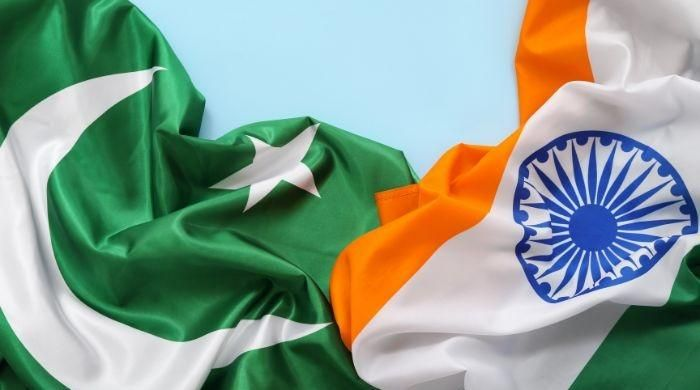
Since its independence in 1947, Pakistan and India have maintained a deep rivalry; however, recent political developments indicate that both countries are evolving in unexpected directions. Contrary to common Western perceptions, which portray India as a secular democracy and Pakistan as an Islamist state, India’s politics have shifted toward a religious far-right, while Pakistan has seen growing left- leaning currents, driven in large part by class tensions. Pakistan was founded upon religion, hence the name, the Islamic Republic of Pakistan, while India was founded upon secular democratic values. However, there seems to be a misconception about the current political realities in both Pakistan and India – especially in their youth. Ironically, despite public perception, India has shifted towards the religious far-right, while Pakistan has been slowly leaning towards more liberal, even Marxist values, in the past few decades. Both of which are responses to each country’s internal problems, and most importantly, class consciousness.
India’s Shift to the Far-Right.
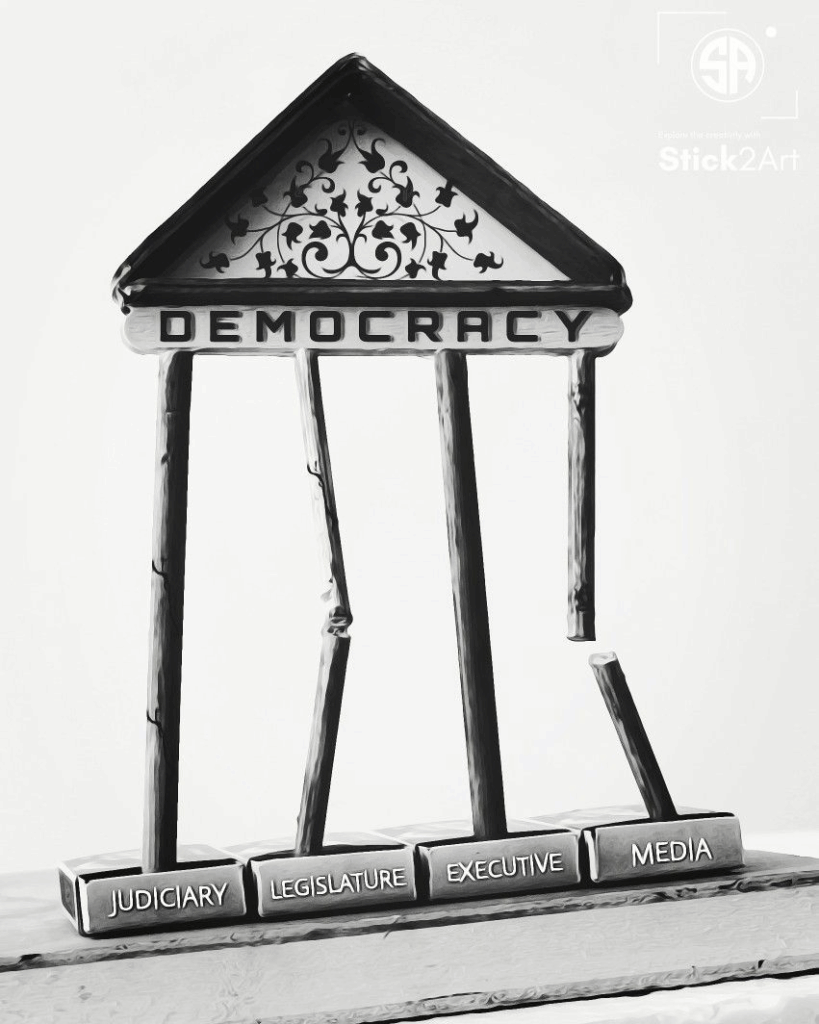
The BJP (Bhartiya Janata Party), India’s dominant political party, is officially described as centre-right but is increasingly characterized by scholars and journalists as right-wing to far-right due to its Hindutva ideology. The movement is known as Hindutva (term popularized by Vinayak Damodar ‘Veer’ Savarkar). Savarkar, who sometimes described himself as an atheist, recast ‘Hindu’ as a cultural and political identity rather than only a religious one. Some early Hindutva figures, notably V.D. Savarkar and M.S. Golwalkar, have been compared by scholars and journalists to certain European fascist ideas, especially in their emphasis on a unitary national/ethnic identity.
There have been documented examples of individuals and fringe groups on social media expressing admiration for Adolf Hitler, a phenomenon commentators tie to extreme ethnic-nationalist rhetoric online rather than mainstream Indian politics. Critics say that some of the language used against religious minorities in India is similar to old patterns of blaming and dehumanizing certain groups. They warn not to directly compare it to the Nazis, but they do note that some of the attitudes feel worryingly similar.
Online and political rhetoric has at times included misrepresented religious texts and images to portray Muslims as threats to Indian culture; media analyses have documented such campaigns.
Viral hate speech and sensational rumours have circulated online, contributing to an atmosphere in which communal violence and targeted attacks against Muslims have increased. When Prime Minister Modi came to power, reports by NGOs and human-rights groups documented a sharp rise in cow-related lynchings and vigilante attacks since 2014 (which involve attacking someone for the “crime” of eating cow meat). These attacks have left members of Muslim, Sikh, and Christian communities dead or injured, and human-rights groups have documented many such incidents targeting religious minorities. The mainstream media has been putting an effort into demonizing Muslims and calling for violence towards them (directly and indirectly), while also twisting history to make Muslims appear otherwise, a pattern similar to how the Nazis burned books and painted their own version of history to target minority members of the community.
Recently, a film trailer revived the controversial ‘Taj was a Hindu temple’ claim, a theory long promoted by fringe authors and critics and widely debunked by historians. This has of course, shown signs of far-right fascism we witnessed in Europe in the 30s and 40s. Several journalists who challenged powerful interests have been murdered in recent years; one prominent case is Gauri Lankesh, shot dead in Bengaluru on 5 September 2017. Authorities have linked her killing to extremist motivations investigated in court. This has also led to many other signs of fascism, such as accusations of vote rigging, and of course, trying to unite the working class and the upper class, which hasn’t worked out. Observers, including academics, have expressed alarm about rising right- wing sentiment among some students and civil society groups; cite specific campus incidents or studies where possible.
Pakistan’s Shift to the Far-Left.
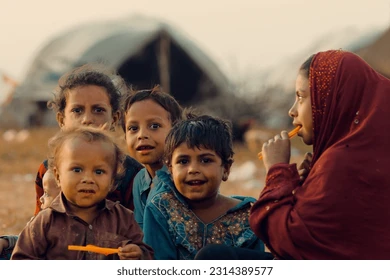
Pakistan is no different to class consciousness with the national poverty rate (around 2023- 2024) being 25.3% while the international poverty rate going as above as 45% and the unemployment rate increasing to 7% from the previous year not to mention various human rights violations of child labour and classism. This has accumulated and led to a lot of crime and unrest within Pakistan.
Balochistan and Khyber Pakhtunkhwa (KPK), the poorest provinces within Pakistan have seen a surge in terrorism and crimes these past few years. Due to such situations, Pakistani youth has become more and more liberal each year, and even left-leaning. The youth face unemployment, lack of education, and a desire for more rights for the working class. It’s not just the youth, Pakistan itself has already implemented many “left-leaning” reforms, which have fueled the nation’s current situation.
Part of Imran Khan’s appeal came from his welfare programs and populist economic messaging. Pakistani youth have gone on two separate paths: either religious fundamentalists or leftist liberals. In my view, left-leaning ideas appear increasingly visible online and in student activism.
Conclusion:
What we see now in India and Pakistan is an evolution of the nations – a switch in tides between what each nation was founded on. Pakistan, founded on Islam, is now becoming leftist and some might argue, even secular, while India, the secular democracy, is slowly falling to a far-right fundamentalist dictatorship. Both are examples of how a frustrated nation can either swing far left and try to take out the upper class, or far right and blame their issues on minorities.