By
Fatima Amin
Investigative Correspondent
The phrase “Human Rights” has come to be associated with moral superiority, especially by Western nations and is frequently employed as a diplomatic tool rather than a universal pledge. However, an increasing amount of data, analysis, and global criticism points to the opposite. Therefore, who actually has the authority to defend human rights?
Background and Context
The Principle VS Practice Divide Western democracies, especially the US and EU members have long positioned themselves as defenders of democracy, freedom and human rights. They frequently call for sanctions and mobilize international opinion by denouncing abuses in China, Russia, North Korea, and Iran. However, there is a clear contradiction in their silence or even complicity when allied nations commit comparable or even more serious crimes. One of the most glaring examples is the Israeli-Palestinian conflict. The West publicly backs Ukraine against Russian aggression but is hesitant or unwilling to take similar action against Israel for its actions in Gaza where disproportionate military responses have killed thousands of civilians, including children. The same cannot be said for India’s policies in Kashmir, Egypt’s repression of dissent or Saudi Arabia’s war in Yemen.
Geopolitics Cloaked as Morality
International ethics expert Dr. Arundhati Rajan, a political scientist, observes: “Human rights are frequently used as political instruments. It is rarely applied consistently. Enemies are humiliated while allies are protected” In addition to undermining the international human rights framework, selective enforcement of rights reveals the hypocrisy inherent in international diplomacy. The U.S. invasion of Iraq which was based on fabricated claims of WMDs, or the drone strikes in Pakistan and Yemen which were widely condemned for breaking international law and killing civilians but were justified under the pretext of security are one of the few evidences of this phenomena.
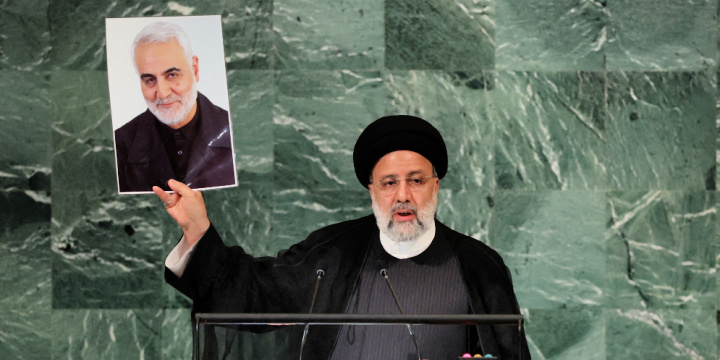
Ebrahim Raisi addressing the UN General Assembly. Iran’s president highlights Western “silence” on human rights abuses in allies’ countries.
Global Media Analysis
According to Al Jazeera there is a “dehumanizing bias” in Western media about Palestinian deaths, which emphasizes Israeli narratives while downplaying suffering on the other side. Turkey accuses the United States of using a “convenient morality” in its human rights report conveniently leaving out Israeli violations (Reuters, 2024).
The Rise of Alternative Powers
Hope or Hype? Some countries in the Global South have put forth alternative frameworks in response to the growing disenchantment with Western human rights advocacy but these are not without problems. China’s soft power diplomacy and economic assistance are accompanied by a history of repression particularly against Uyghur Muslims. Despite having democratic institutions, Brazil and India are criticized for their respective environmental degradation and intolerance of religion.
Who Truly Holds the Power?
In actuality, superpowers are not the only ones responsible for upholding human rights. It lies with:
- Journalists and Independent Media: They reveal censorship and violence by the state.
- Human Rights Organizations: NGOs like Amnesty, HRW and local advocacy groups.
- The Global Public: Whose voices, votes and resistance shape policy outcomes.
- International Bodies: While imperfect, institutions like the UN can pressure governments though often paralyzed by veto power.
Final Thoughts
The double standard for human rights in the West is a crisis of international trust. The credibility of the international human rights system will continue to be shattered until strong nations consistently protect human rights, irrespective of their political affiliation, religious belief or resource advantages. The bravery of those who reveal facts, hold the powerful accountable, and refuse to be silenced even if their respective governments do so, is what truly possesses the power to dismantle the hypocritic behaviour of the West.